
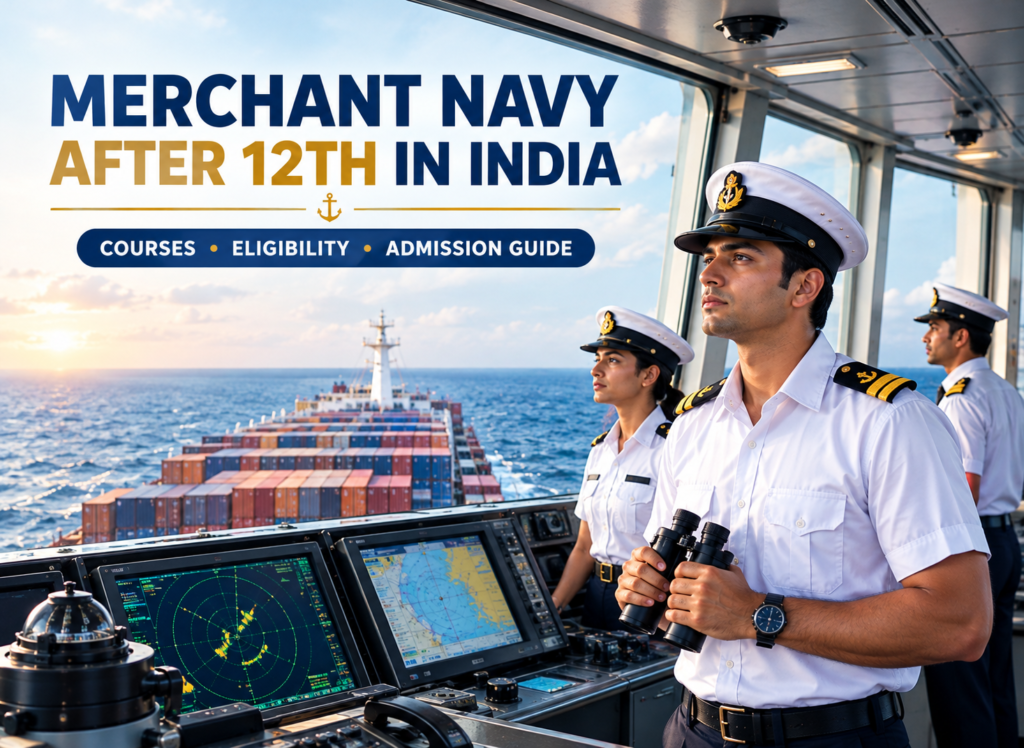
“Merchant Navy After 12th in India: Courses & Eligibility”
Choosing a career after Class 12 can be challenging, especially when you are interested in a career at sea. The Merchant Navy after 12th is one option students explore when considering careers in navigation, marine engineering and commercial shipping.
However, entering the maritime industry requires more than an interest in ships. Students must understand the available courses, educational requirements, medical fitness standards, entrance examinations and professional training pathways before selecting a programme.
For students and parents in Nagpur, Bhandara and other parts of Maharashtra, knowing how to verify a training institute and identify the correct admission route can help avoid confusion during the career-planning process.
This guide explains the key options, important eligibility considerations and official resources students across India can use when researching a Merchant Navy career.
What Is the Merchant Navy?
The Merchant Navy is part of the commercial maritime industry. Its ships transport goods, fuel, commodities and passengers across domestic and international routes.
Depending on their qualifications and training, maritime professionals may work in navigation, marine engineering, ship operations and other specialised roles.
A Merchant Navy career may involve working away from home for extended periods, following strict safety procedures and working as part of an international crew. Students should understand these responsibilities before deciding whether this career suits their interests and expectations.
Is the Merchant Navy the Same as the Indian Navy?
No. The Merchant Navy and the Indian Navy serve different purposes.
The Indian Navy is a military service responsible for maritime defence and related national-security duties. The Merchant Navy operates in commercial shipping and maritime transport.
Their entry requirements, recruitment processes, training systems and professional responsibilities are different.
Students interested in military service can read DSA’s existing guide, Army vs Navy vs Air Force After 12th: Which Defence Career Is Right for You?. This can help them explore military career options separately from commercial maritime careers.
Which Merchant Navy Courses Can You Pursue After Class 12?
The suitable course depends on your academic background and the role you want to pursue. Some of the main pathways to research are outlined below.
1. B.Sc. Nautical Science
B.Sc. Nautical Science is a degree programme associated with the deck side of a ship. Training relates to areas such as navigation, watchkeeping, cargo operations and safe vessel operations.
Students considering this route should check the applicable Class 12 subject requirements, marks, entrance examination, age criteria and medical standards.
The programme’s admission requirements should be verified through the relevant official prospectus before applying.
2. Diploma in Nautical Science (DNS)
The Diploma in Nautical Science, or DNS, is another pathway associated with deck-officer training.
Students must understand the programme structure and the requirements that follow the initial course. Depending on the approved pathway, further training, assessments, onboard experience and professional certification may be required.
Admission to DNS should not be treated as an automatic guarantee of employment or professional certification.
3. B.Tech. in Marine Engineering
B.Tech. Marine Engineering is relevant to students interested in a ship’s technical systems and machinery.
Depending on the role, marine engineering work can involve propulsion systems, engines, electrical equipment, mechanical systems, maintenance and shipboard safety.
Students should verify the course-specific Physics, Chemistry and Mathematics requirements, minimum marks, entrance process and applicable medical standards.
4. Rating-Level and Other Maritime Training Routes
The maritime industry also has rating-level and other training pathways with eligibility rules that may differ from officer-entry programmes.
Some routes may accept applicants on the basis of Class 10 qualifications, while others have particular subject, age, marks or medical requirements.
Students who did not study Physics, Chemistry and Mathematics in Class 12 should not assume that every maritime career route is available to them—or that all maritime options are closed. They should identify the intended role and check its official eligibility requirements.
Important: Similar course names can lead to different qualifications and career pathways. Always verify the course structure, approval status and professional requirements before paying an admission fee.
What Is the Eligibility for Merchant Navy After 12th?
There is no single eligibility rule that applies to every Merchant Navy course. Requirements depend on the programme, the admission cycle and the relevant regulatory conditions.
1. Educational qualification and marks
Many officer-entry programmes, including several nautical science and marine engineering pathways, require Physics, Chemistry and Mathematics at Class 12 level.
Some programmes also prescribe minimum aggregate marks in PCM and minimum English marks. The exact conditions, permitted relaxations and accepted qualifications can vary by course.
Before applying, check the Indian Maritime University admission information and the prospectus for the relevant intake. Do not use an older prospectus as the final authority for a future admission cycle.
2. Age and other conditions
An age limit may apply to the course you select. The way age is calculated and any permitted category-based relaxations must be checked in the relevant admission notification.
Marital-status requirements or other conditions may also apply to specific programmes.
Avoid relying on age limits or admission criteria copied from an old blog, social-media post or coaching advertisement.
3. Medical fitness and eyesight
Medical fitness is an important consideration for seafaring careers. Depending on the intended role and applicable standards, assessments may cover eyesight, colour vision, hearing and general physical fitness.
Students should consult a medical examiner recognised under the applicable DG Shipping requirements and check the relevant standards before committing to a course.
Refer to the official DG Shipping medical standards for more information.
Is IMU-CET Required for Merchant Navy Admission?
The Indian Maritime University Common Entrance Test, commonly called IMU-CET, is a key entrance examination for several maritime education pathways.
Under the applicable admission rules, IMU-CET is required for specified programmes, including B.Sc. Nautical Science and DNS. Requirements for marine engineering and other programmes should also be checked against the relevant intake’s official prospectus and admission notices.
Do not assume that every maritime course follows the same entrance process. Certain pathways may have additional selection requirements, sponsorship arrangements or other admission conditions.
Before preparing for the examination:
- Identify the course and the role it can lead towards.
- Check the academic, age and medical eligibility conditions.
- Confirm the entrance examination or selection process.
- Review the syllabus and examination pattern where applicable.
- Track the official registration, counselling and admission notifications.
For official information, use the IMU admissions portal. Admission dates and procedures change by intake, so check the current notices rather than relying on dates published for a previous year.
How to Choose a Reliable Merchant Navy Training Institute in India
Choosing a training institute requires more than comparing fees, facilities or promotional claims. Its approval status and the validity of the course are particularly important.
1. Check the institute and course approval
Verify the institute’s identity and whether the specific course you intend to join is approved under the applicable requirements. Approval for one course should not be assumed to cover every programme offered by the same organisation.
2. Review regulatory notices
Check for applicable course restrictions, suspension orders, approval changes or other notices that could affect the programme. If the status is unclear, seek clarification from the relevant authority before making a payment.
3. Understand the complete fee structure
Request a written breakdown of the total costs, including tuition, examination charges, accommodation, uniforms, medical assessments, equipment and any additional training fees.
Read the refund policy carefully and retain copies of the admission offer, payment receipts and written communications.
4. Be cautious about guaranteed job claims
Be careful with claims promising guaranteed employment, a particular salary or assured placement without clearly explaining the conditions.
Entrance coaching does not guarantee admission. Admission to a course does not automatically guarantee successful training completion, professional certification or employment.
Ask for clear information about placement assistance and independently verify any claims about employment outcomes.
5. Confirm the training and certification pathway
Before enrolling, understand what follows the initial course, including further training, required assessments, onboard experience and professional certification where applicable.
Make sure the programme matches the qualification and career role you intend to pursue.
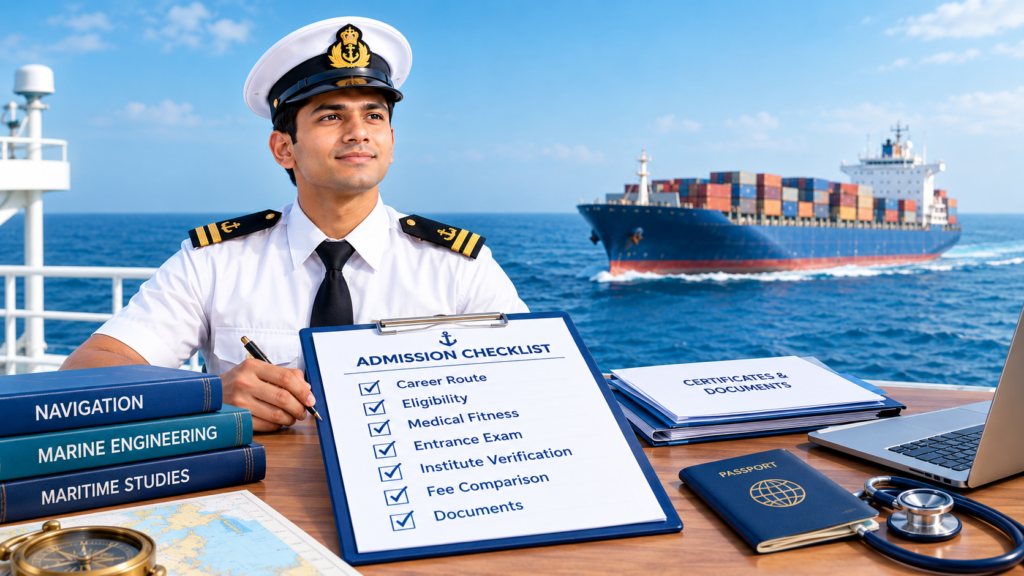
Merchant Navy Admission: A Checklist for Students in Nagpur and Maharashtra
Students in Nagpur, Bhandara and other parts of Maharashtra can use the following process when researching maritime courses.
- Step 1: Choose your intended career route. Decide whether you are interested in navigation, marine engineering or another maritime occupation.
- Step 2: Check your academic eligibility. Compare your Class 10 and Class 12 subjects and marks with the official course requirements.
- Step 3: Review the medical standards early. Understand the applicable medical and eyesight requirements before making a major financial commitment.
- Step 4: Confirm the entrance process. Check whether IMU-CET or another selection process applies to your chosen programme.
- Step 5: Verify the training institute. Confirm the institute’s and course’s approval status through the relevant official records.
- Step 6: Compare the full costs. Obtain written fee details, refund terms and information about additional training or certification requirements.
- Step 7: Keep your documents ready. Follow the official application instructions and retain copies of your forms, certificates and receipts.
Whether you are researching Merchant Navy courses in Nagpur, Bhandara or elsewhere in Maharashtra, the most important consideration is choosing a suitable, verified pathway—not simply the location or promotional claims of an institute.
Is the Merchant Navy the Right Career for You?
A maritime career can involve technical responsibilities, strict safety procedures, teamwork and extended periods away from family. The day-to-day experience differs by role and employer.
Before choosing a course, consider whether you:
- Meet the applicable academic and medical requirements.
- Have an interest in navigation, engineering or maritime operations.
- Understand the lifestyle and responsibilities of seafaring work.
- Have reviewed the total course costs and professional requirements.
- Have checked the institute’s approval status and the career pathway it offers.
Discuss your options with your family and use official sources to verify important admission and employment information.
Merchant Navy Entrance Exam Guidance in Maharashtra
Students researching Merchant Navy entrance exam coaching in Maharashtra should distinguish between entrance-exam preparation, career counselling and formal maritime training.
Defence Services Academy (DSA) discusses Merchant Navy entrance preparation and career guidance in its existing article, Why Defence Services Academy Is the Top Defence Coaching Academy in Maharashtra.
Students in Nagpur, Bhandara and nearby areas can use this as a starting point to understand DSA’s stated defence and maritime guidance offerings. They should confirm the current availability and scope of any coaching programme directly with the academy.
Remember: Entrance coaching and career guidance are not the same as an approved pre-sea maritime training programme. Independently verify the relevant DG Shipping approval before enrolling in formal maritime training.
FAQs
Q1: Can I join the Merchant Navy after Class 12?
Yes, eligible students can explore several maritime education and training pathways after Class 12. The appropriate route depends on the course, academic subjects, marks, age, medical fitness and applicable admission conditions.
Q2 : Is PCM compulsory for Merchant Navy after 12th?
PCM is required for many officer-entry programmes, including several nautical science and marine engineering routes. Other maritime pathways can have different requirements, so students should check the exact course criteria.
Q3: Is IMU-CET compulsory for every Merchant Navy course?
No single rule applies to every maritime course. IMU-CET is required for specified programmes under the applicable admission rules. Verify the relevant prospectus and official notices for your intended course.
Q4: What is the difference between the Merchant Navy and the Indian Navy?
The Indian Navy is a military service, while the Merchant Navy operates in commercial shipping and maritime transport. Their recruitment routes, duties, training systems and career requirements differ.
Q5: How can students from Nagpur apply for Merchant Navy courses?
Students from Nagpur can identify suitable courses, check eligibility, prepare for the applicable entrance process and apply according to official admission instructions. They should also verify medical requirements and course approval before paying fees.
Q6: How do I check whether a Merchant Navy training institute is approved?
Consult the DG Shipping approved training institute records and verify the specific course. Check relevant regulatory notices before making a financial commitment.
Q7: Does Merchant Navy entrance coaching guarantee a job?
No. Coaching may support entrance-examination preparation, but it does not guarantee admission, successful course completion, certification or employment.
CONCLUSION
Choosing the Merchant Navy after 12th in India requires careful research into course options, eligibility, entrance examinations, medical fitness and training-institute approval.
For students in Nagpur, Maharashtra and across India, the best starting point is to identify the right pathway for their academic background and career interests. Use the latest official IMU and DG Shipping information, compare the total costs and understand the requirements that follow admission.
Contact Defence Services Academy to discuss the appropriate NDA preparation pathway for your daughter.
📍 No.6, National Highway, Tah+Dist:, Nandora, Shahapur, Maharashtra 441906
☎️ 7798644422 | 99750 63722
✉️ sgbscience@gmail.com
🌐 defenceservicesacademy.com/en/
 English
 हिन्दी