
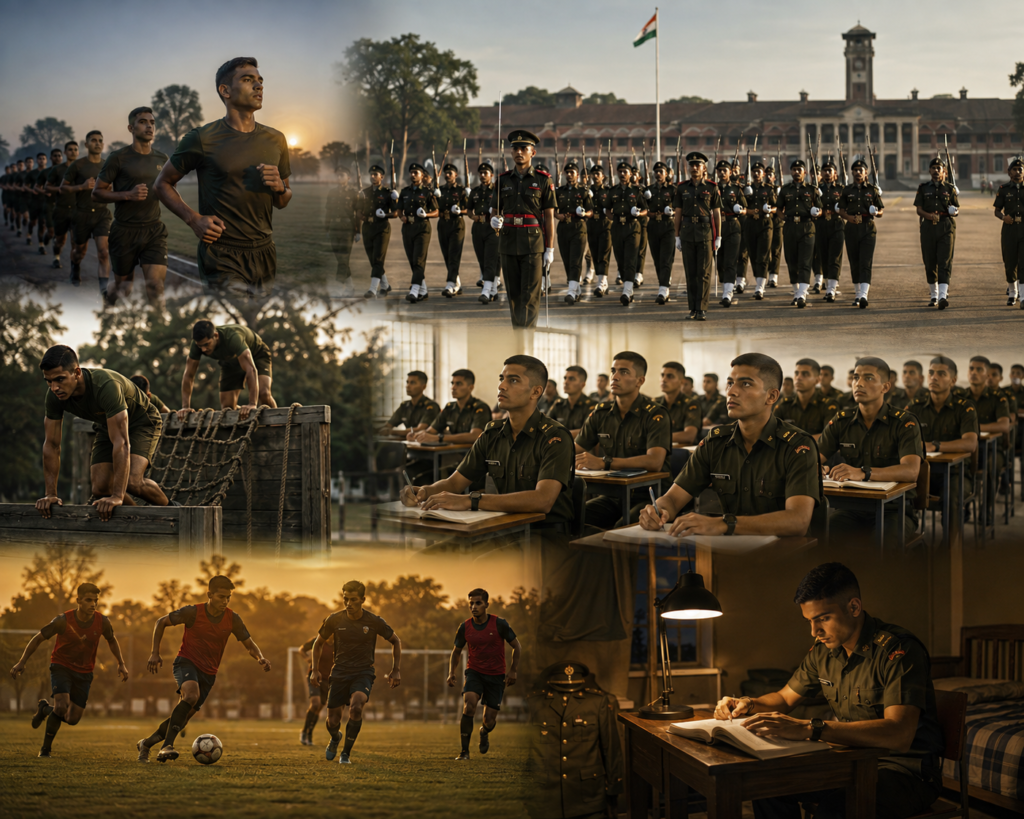
The moment your SSB results say “recommended,” everything changes. Weeks of anxious waiting, screening tests, and interview rounds finally give way to relief and almost immediately, a new question takes over: what actually happens now? Every year, lakhs of aspirants attempt the NDA written exam, but only a fraction clear it and make it through the SSB interview. Yet very few of these successful candidates or their parents know what life at NDA truly looks like once the celebrations settle down.
This guide walks you through the entire NDA selection process and beyond from the day your SSB result arrives to the day you’re commissioned as an officer. Whether you’re a cadet preparing to join, a parent trying to understand what your child is about to experience, or an aspirant currently going through NDA preparation in Maharashtra, this blog gives you a clear, honest picture of life at the National Defence Academy after SSB.
What Happens Immediately After SSB Selection
Clearing the SSB interview isn’t the final step of the NDA selection process it’s the gateway to the next one.
Medical Examination: After SSB recommendation, candidates undergo a detailed medical examination at a military hospital. This checks fitness standards for vision, hearing, height-weight ratio, and overall physical health. Any medical disqualification at this stage can affect final selection, so candidates are advised to stay fit and address minor health issues well in advance.
Merit List and Joining Letter: Once medical clearance is done, UPSC releases the final merit list based on combined written exam and SSB marks. Selected candidates then receive their official joining instructions from NDA headquarters, specifying the reporting date and course details.
Documents Required Before Joining: Candidates are expected to carry original certificates (educational, identity, medical), photographs, and other documents listed in the joining letter. Missing paperwork can create unnecessary delays, so it’s best to prepare a checklist early.
For candidates going through SSB selection in Maharashtra, this stage is where structured guidance really pays off knowing what to expect at the medical board and what documents to prepare in advance removes a lot of last-minute stress.
Joining the National Defence Academy — Day One
Reporting day at NDA, Khadakwasla (Pune), is where the real transformation begins.
New cadets are received, documented, and taken through a re-verification of medical fitness. This is followed by orientation sessions that introduce them to the academy’s rules, discipline standards, and the training schedule ahead.
Cadets are then assigned to one of the academy’s squadrons, their “family” for the next three years. From this point on, structure and discipline take over: fixed timings, uniform codes, and a completely new way of life. For most cadets, the first few days are a mix of excitement, nervousness, and quick adaptation, a preview of the resilience they’ll build over the coming years.
The 3-Year Training Structure at NDA
NDA training follows a well-defined three-year programme, split into six terms of six months each, combining academics, military training, and physical conditioning.
Academic Training
The academic curriculum at NDA is affiliated with Jawaharlal Nehru University (JNU), allowing cadets to earn a Bachelor’s degree in Arts, Science, or Computer Science alongside their military training.
- Science Stream: Physics, Chemistry, Mathematics, Computer Science
- Humanities Stream: Political Science, Economics, History, Geography, Languages
- Technical Training: Foundational engineering concepts relevant to each service branch
Military Training
Military training builds the core skills every future officer needs:
- Drill and Parade for discipline, coordination, and formation movement
- Weapon Training covering handling and use of firearms
- Field Craft and Tactics including survival skills, basic tactics, and map reading
- Service-Specific Training Army cadets focus on infantry tactics, Navy cadets learn navigation and seamanship, and Air Force cadets study aerodynamics and aircraft basics
Physical Training
Physical fitness is non-negotiable at NDA. Daily PT includes running, calisthenics, and obstacle courses, along with swimming and horse riding, which cadets gradually learn to master. Team sports like football, hockey, basketball, and boxing round out the routine, building both fitness and team spirit.
A Typical Day at NDA (Daily Routine Breakdown)
One of the most common questions aspirants and parents ask is: what does an actual day at NDA look like? The NDA daily routine is intense but structured, designed to build discipline, endurance, and time management from the very first hour of the day.
Morning : Reveille to Physical Training
- 4:00 AM – 5:30 AM (Reveille): The wake-up call sounds across campus, with exact timing varying slightly by term. The intent stays constant: instilling urgency and discipline from the first minute.
- Personal Hygiene & Preparation: Cadets get a short, tightly managed window to get ready zero room for delay, an early lesson in military efficiency.
- Around 5:00 AM (Physical Training): Roughly an hour of running, push-ups, sit-ups, rope climbing, and obstacle courses, building physical strength, endurance, and mental resilience.
- Drill Practice: Marching and parade formations follow PT directly. Synchronizing movement as a unit builds coordination, discipline, and genuine teamwork, while also sharpening agility and stamina.
- Breakfast: Cadets eat before academic classes begin at 8:00 AM.
Afternoon : Academics, Lunch & Sports
- 8:00 AM – 1:00 PM (Academic Classes): A genuinely broad curriculum spanning military history and strategy, science, and service-specific subjects, with short breaks built in to help cadets reset. The focus goes beyond rote learning building critical thinkers who communicate well and make sound, ethical decisions under pressure.
- 1:00 PM – 2:30 PM (Lunch): One of the few genuinely relaxed stretches of the day. The mess hall becomes a space for bonding over shared meals, with food designed to meet the heavy nutritional demands of PT and academics alike.
- 3:00 PM – 6:00 PM (Sports & Extracurriculars): Football, basketball, hockey, volleyball, and similar team sports build more than fitness they teach cadets to handle winning and losing with the same composure, an underrated leadership trait.
Evening : Study, Dinner and Lights Out
- Room Time: As daylight fades, cadets attend to personal hygiene and set their living spaces in order room discipline is taken as seriously as everything else in military life.
- 6:30 PM – 8:00 PM (Study Period): Dedicated time for academic review, exam preparation, and clearing doubts with instructors. Self-discipline matters here since no one enforces focus but the cadet.
- 8:30 PM – 8:50 PM (Dinner): A brisk affair, with cadets expected to eat efficiently rather than linger, though it still offers one more informal window for bonding with squadron mates.
- 10:00 PM – 10:30 PM (Lights Out): The day officially closes a quiet, restorative pause before another disciplined day begins, in a routine that repeats until discipline becomes second nature.
NDA Culture and Traditions
Beyond the training schedule, NDA has a deep-rooted culture that shapes cadets as much as the coursework does.
Squadron System: Every cadet is placed into one of NDA’s squadrons, which becomes their identity for three years. Inter-squadron competitions in sports, drill, and academics build healthy rivalry alongside strong internal bonding.
Traditions and Ceremonies: From guest nights to camp bonfires, NDA blends military discipline with moments of celebration. The Passing Out Parade (POP) is the most significant of these a ceremonial send-off marking the end of three years at NDA and the start of specialized training.
Brotherhood Across India: Cadets arrive from every state, background, and language group, yet the shared routine and challenges create a bond that often lasts a lifetime. This diversity is one of NDA’s defining strengths.
Respect and Honour Code: Seniority is respected, but mentorship not harassment defines the relationship between senior and junior cadets. Discipline at NDA is strict, but it’s built on structure and example rather than fear.
Challenges and Solutions
No transformation this significant comes without difficulty, and it’s important for aspirants and parents to know this honestly.
Common Challenges:
- Homesickness, especially in the first few months away from family
- Physical strain from the demanding daily PT and drill schedule
- Balancing rigorous academics with military training
- Adjusting to strict discipline and structured routines
How Cadets Overcome These:
- Squadron system builds a natural support network seniors mentor juniors
- Cadets lean on each other during tough phases
- The structured routine becomes a source of stability once settled in
- Academy counselling support is available when needed
- Challenges of the first term typically ease by the second or third
Rewards
Despite the hard work, the rewards are what make the journey worthwhile:
- Strong leadership and decision-making skills built through real responsibility
- Friendships that often last an entire career and beyond
- A level of physical fitness and mental resilience few civilian paths offer
- Career security and a clear path to becoming a commissioned officer
- A genuine sense of national pride and purpose
Career Paths After NDA Training: Army, Navy & Air Force
After three years of training, cadets take part in the Passing Out Parade, a proud and emotional milestone marking the transition from NDA cadet to specialized officer trainee. From here, cadets move to their respective service academies for one year of specialized training before being commissioned as officers in the Indian Armed Forces. But NDA is only the foundation what comes next shapes which uniform, and which career, a cadet will wear for life.
Once NDA training concludes, cadets are streamed into their chosen service branch for this specialized instruction.
Indian Military Academy (IMA) : Army Officer Training
Located in Dehradun, IMA trains cadets headed for the Indian Army. Training here builds on NDA’s foundation with advanced infantry tactics, leadership exercises, and field operations, preparing cadets for combat and command roles.
Indian Naval Academy (INA) : Navy Officer Training
Based in Ezhimala, Kerala, INA focuses on navigation, seamanship, and ship systems, preparing cadets for life at sea as Navy officers.
Air Force Academy (AFA) : Air Force Officer Training
Located in Hyderabad, AFA trains cadets in aerodynamics, aircraft handling, and flight operations, shaping future Air Force officers and pilots.
Within each academy, cadets may also pursue specialization streams such as fighter pilot training, infantry, or technical/engineering corps based on merit, aptitude, and service requirements.
First Posting After NDA & Academy Training
“Posting” refers to a newly commissioned officer’s first operational assignment after completing training.
The Full Timeline: NDA (3 years) → respective service academy (1 year) → commissioning → first posting. From the day of joining NDA to receiving the first stripes as a commissioned officer, the journey typically spans four years.
What Determines a Posting: Final postings depend on several factors merit ranking during training, current vacancies, personal preference for arm or branch (such as infantry, artillery, or engineers in the Army), and overall service requirements at the time.
Life at First Posting: A newly commissioned officer typically joins an operational unit, often in a field or forward area, and takes on real responsibilities almost immediately leading soldiers, managing logistics, or handling specialized equipment, depending on the branch. It’s a steep learning curve, but one that NDA and the respective academy have spent four years preparing for.
How Defence Services Academy Prepares You for This Journey
At Defence Services Academy, our goal isn’t just to help students clear the NDA written exam, it’s to prepare them for the life that follows. As a trusted name in NDA Coaching in Maharashtra, our NDA Written + SSB Coaching program builds academic strength alongside the physical fitness, discipline, and mental toughness that NDA life demands from day one.
We also run a dedicated SSB Interview Training program to help candidates not just clear the interview, but walk into NDA already familiar with the discipline and structure they’ll encounter. For younger aspirants, our NDA Foundation Program starting from Class 8 builds this readiness even earlier making us one of the most complete options for NDA training in Maharashtra.
With 179+ students selected in NDA and 65+ students selected in the Navy, our approach to NDA preparation in Maharashtra focuses on preparing students for the complete journey not just the exam. Take a look at our student results and success stories to see how our cadets have gone on to thrive at NDA and beyond.
FAQs
Q1: What is the NDA daily routine?
A typical day at NDA includes early-morning physical training and drill, followed by academic classes, military training, sports, and other activities. Evenings may include self-study and preparation for the next day, with the routine following the academy’s structured schedule.
Q2: Do NDA cadets get a stipend or salary during training?
Yes, NDA cadets receive a monthly stipend during their training, subject to the applicable government rules and regulations. The stipend is provided during the training period before they are commissioned as officers.
Q3: Is NDA training the same for Army, Navy, and Air Force cadets?
The three-year training at NDA is largely common for Army, Navy, and Air Force cadets, covering academics, physical training, drill, and military activities. After NDA, cadets proceed to their respective service academies for further specialised training.
Q4:How does the posting process work after NDA and academy training?
After completing NDA and subsequent service-specific training, cadets are commissioned as officers. Their initial posting depends on factors such as service requirements, merit, vacancies, and applicable allocation policies. They then begin their professional duties in their respective service.
Q5: Can NDA cadets go home during training?
Yes, NDA cadets may get leave during designated periods of the training schedule. However, leave is regulated by the academy and depends on the training calendar, examinations, official activities, and other requirements.
Q6: Do Cadets Get Holidays During NDA Training?
Yes, NDA cadets get scheduled holidays and leave during their training. However, the timing and duration depend on the academy’s training calendar, examinations, training requirements, and official activities. Cadets can plan their visits home according to the approved leave schedule.
CONCLUSION
From the moment your SSB result says “recommended” to the day you’re commissioned as an officer, the journey through NDA is one of the most transformative experiences a young Indian can go through. It tests you physically, academically, and mentally but it also builds the discipline, leadership, and camaraderie that stay with you for life.
If you’re preparing for NDA or getting ready for the SSB interview, understanding what lies ahead can make all the difference in how you approach your training.
Start your journey with the best NDA Coaching in Maharashtra — Enquire Now
📍 No.6, National Highway, Tah+Dist:, Nandora, Shahapur, Maharashtra 441906
☎️ 7798644422 | 99750 63722
✉️ sgbscience@gmail.com
🌐 defenceservicesacademy.com/en/
 English
  हिन्दी