
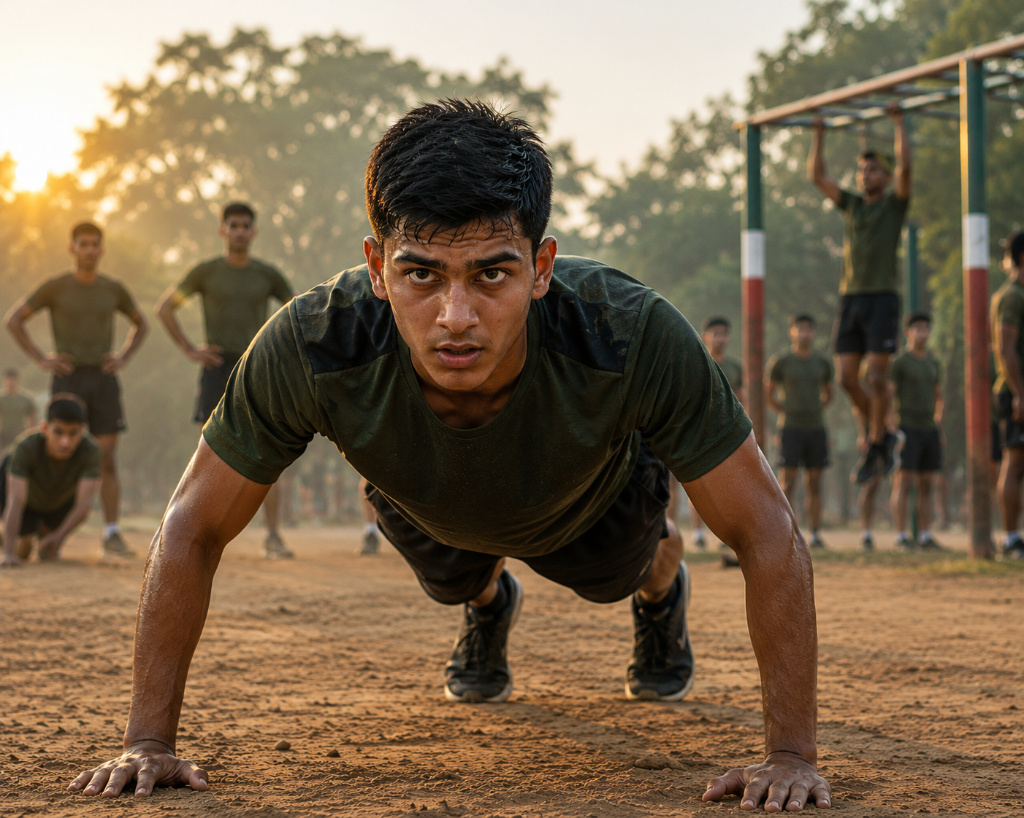
Most NDA aspirants pour every ounce of energy into Maths and GAT. Fair enough, that’s the paper everyone talks about. But here’s the part nobody warns you about early enough: the NDA physical fitness test standards 2026 decide just as much of your future as the written exam does. Clear the paper with flying colors, and you can still get stopped cold at the medical board or the SSB physical tasks if your body isn’t ready.
This guide breaks down exactly what’s expected of your height, weight, running, push-ups, the works along with a training plan you can actually follow, common mistakes that trip up otherwise strong candidates, and a few notes for aspirants training in Bhandara and around Maharashtra. Think of this as the fitness half of your NDA prep that Defence Services Academy makes sure never gets ignored.
What Are the NDA Physical Fitness Test Standards 2026?
Before you touch a single dumbbell, you need to know what you’re actually training for. This isn’t just a school-level fitness check it’s part of a broader armed forces recruitment fitness test process that runs across the medical board and the SSB stage together.
First comes the NDA medical examination criteria, conducted after you clear the SSB interview. This is where the armed forces check whether your body can genuinely handle years of tough training and field postings. Then there are the SSB physical tasks running, obstacle courses, group exercises spread across the five-day SSB process itself.
Here’s the thing a lot of aspirants miss: these standards aren’t there to filter people out for fun. An officer’s job involves carrying loads, running under pressure, and staying sharp when the body is tired. The physical test is simply a preview of that reality. Passing it isn’t the finish line it’s proof you can handle what comes after.
NDA Height and Weight Criteria for Boys and Girls
The NDA height and weight criteria vary slightly by wing, but here’s the general picture most candidates work with:
- Minimum height (male): 157 cm for Army and Navy candidates; slightly higher (around 162.5 cm) for Air Force
- Minimum height (female): 152 cm across wings
- Weight: Must stay proportional to your height and age, based on standard medical tables not a fixed number
Candidates from hilly or tribal regions may get some height relaxation, and exact figures can shift slightly year to year always check the current NDA notification to confirm.
Eyesight, Medical, and Other Physical Eligibility Rules
Vision standards are strict, most branches expect close to 6/6 in one eye and 6/9 in the other, with the Navy holding a tighter line. Colour blindness rules out certain branches entirely.
The medical board also checks hearing, chest expansion, and joint or fracture history. Many fit candidates get rejected here simply because they never got these basics checked before the SSB.
Core Physical Fitness Test (PFT) Components Explained
Once eligibility is sorted, it’s time to look at the actual push-ups pull-ups requirement and the other test components. This is the part your training can genuinely change.
Running 2.4 KM Timing Standards
- Most candidates must meet the standard 2.4 km run timing of around 15 minutes
- Stronger candidates aim well under that for a safety margin
- Running trips up more candidates than any other event usually due to lack of pace training, not fitness
Push-ups, Pull-ups, and Sit-ups Requirements
- Push-ups: around 20 in one go
- Sit-ups: around 20
- Chin-ups/pull-ups: 6–10, depending on branch
These aren’t arbitrary numbers they mirror the strength needed later for a group obstacle race SSB stage, where carrying weight and pulling yourself over obstacles under fatigue is routine.
Rope Climbing, Long Jump & Short Jump Standards
- Rope climbing technique matters more than brute force candidates are expected to manage 3–4 metres with control
- Long/short jump tests explosive leg strength and coordination
- Poor technique not poor fitness causes most failures here
How to Prepare A Practical Training Plan
Good news: none of this needs a fancy gym. What it needs is consistency, structure, and enough runway before your test date.
Beginner-Friendly 8-Week Workout Routine
- Monday & Thursday: Distance running (start at 2 km, build toward 4–5 km)
- Tuesday & Friday: Strength training push-ups, pull-ups, sit-ups, squats
- Wednesday: Flexibility and mobility work stretching, light yoga
- Saturday: Timed practice run (simulate actual test conditions)
- Sunday: Rest or light active recovery
Start light in weeks one and two, then add distance and reps gradually. Rushing this in the first month is exactly how people end up injured before the test even arrives which is why injury prevention during training matters as much as the training itself.
Simple Fitness Tips to Meet NDA Height, Weight, Eyesight & PFT Standards
Knowing the numbers is one thing, actually working toward them is another. Here’s a simple breakdown of what to focus on for each part of the test — the same fundamentals we cover in our structured NDA physical fitness training at Defence Services Academy.
Tips for Height
- Stand and sit with a straight back daily poor posture can cost you real centimetres at the measurement stage
- Eat calcium and Vitamin D-rich foods like milk, eggs, and leafy greens if you’re still in your growth years
Tips for Weight
- Match your target weight to your height-and-age bracket, not a number you saw online
- Lose or gain weight gradually through diet and cardio over weeks never attempt a crash change close to test date
Tips for Eyesight
- Book a full eye check-up months before your SSB call, so any hidden issue can be treated in time
- Reduce screen time and take regular breaks during study hours to protect your vision
Tips for Push-ups
- Focus on correct form first chest down, back straight before trying to increase your count
- Add 2–3 reps every week instead of forcing a big jump, to build strength safely
Tips for Sit-ups
- Keep your neck relaxed and hands lightly placed don’t pull on your neck for momentum
- Practice in timed sets of 20 to build the stamina needed for the actual test
Small, steady changes across each of these areas add up faster than last-minute intensity ever will start now, and let consistency do the work.
Diet Plan to Support Physical Fitness Training
Training hard on poor fuel is like preparing a car for a race and forgetting the petrol. A basic diet plan for NDA aspirants doesn’t need to be complicated:
- Protein with every meal eggs, lentils, paneer, chicken if you eat it
- Complex carbs for sustained energy rice, roti, oats
- Plenty of water, especially before and after running sessions
- A proper recovery meal after intense training days
Common Mistakes Aspirants Make And How to Avoid Them
Most fitness-related rejections aren’t about lack of effort. They’re about training the wrong way.
Overtraining and Ignoring Recovery
Pushing every single day without rest feels productive, but it backfires. Muscles need recovery time to actually get stronger skip that, and you end up tired, slower, and more injury-prone right when you need to peak.
Poor Running Technique and Breathing Errors
A lot of candidates sprint the first 500 metres and crawl through the rest. Pace yourself instead. Breathe in a steady rhythm in through the nose, out through the mouth rather than gasping erratically once fatigue sets in.
Skipping Flexibility and Warm-Up Routines
Jumping straight into running or push-ups with cold muscles is one of the fastest ways to pull something right before your test date. A five-minute warm-up and proper cool-down are basic injury prevention during training habits, not optional extras.
How Physical Fitness Connects to the SSB Interview Stage
Clearing the written exam and even the initial physical checks doesn’t mean fitness stops mattering. The group obstacle race SSB tasks, individual obstacle tasks, and command tasks test the exact same stamina and strength you built earlier, just under group pressure and time limits.
Assessors aren’t only watching how fast you run or how many push-ups you manage. They’re watching how you handle fatigue, whether you help teammates when you’re tired yourself, and whether you keep composure under stress. This is what officer like qualities and physical fitness look like together on the ground the two are never really separate at SSB.
FAQs
Q1: How long does it take to prepare for the NDA physical fitness test?
Most aspirants see solid results with a structured 8–12 week training plan that combines running, strength training, and flexibility work. Starting early and staying consistent matters far more than intense last-minute training.
Q2: What are the most common reasons candidates fail the NDA physical fitness test?
The usual culprits are poor running pace, skipping warm-ups (leading to injuries), overtraining without recovery, and weak technique in rope climbing or jumps not lack of overall fitness.
Q3: What is the NDA physical fitness test?
The NDA physical fitness test is a set of medical and physical benchmarks including height, weight, running, push-ups, and vision standards that candidates must clear after the written exam and SSB interview to join the National Defence Academy.
Q4: What is the best way to prepare for the NDA physical fitness test in 2 months?
Focus on a structured routine combining running for endurance, bodyweight strength exercises, and flexibility work, while prioritizing rest days to avoid injury before the test date.
Q5: Why do fit candidates still fail the NDA physical fitness test?
Many physically fit candidates fail due to poor technique in jumps or rope climbing, lack of pacing practice for the running test, or skipping medical checks like vision and hearing before the SSB stage not due to actual lack of fitness.
Q6: How many sit-ups are required for the NDA physical fitness test?
Candidates are generally expected to complete around 20 sit-ups, which assesses core strength relevant to later SSB physical tasks..
Q7: What is the minimum rope climbing distance required for NDA?
Candidates are typically expected to climb 3 to 4 metres with control, and technique matters more than raw strength in this component.
Q8: Is running or strength training more important for NDA selection?
Both matter equally. Running builds the cardiovascular endurance tested in the 2.4 km run, while strength training supports push-ups, pull-ups, and SSB obstacle tasks neglecting either creates gaps in overall readiness.
CONCLUSION
The NDA physical fitness test standards 2026 aren’t there to make life difficult, they’re there to prepare you for a career that genuinely demands a strong, resilient body. Know the standards, follow a structured training plan, eat right, and avoid the common mistakes that catch out unprepared candidates every year.
Fitness prep isn’t something to squeeze in during the last two weeks before your SSB call letter arrives. Start now, stay consistent, and treat it with the same seriousness as your written exam prep. If you’re based in Bhandara or anywhere around Vidarbha and want structured guidance that covers both academics and fitness, reach out to Defence Services Academy your officer journey deserves prep on every front, not just one.
Start Your NDA Fitness Journey Today
Have questions about NDA fitness standards or training plans? Defence Services Academy in Bhandara is here to guide you, reach out and let’s build your prep together.
Contact us now.
📍 No.6, National Highway, Tah+Dist:, Nandora, Shahapur, Maharashtra 441906
☎️ 7798644422 | 99750 63722
✉️ sgbscience@gmail.com
🌐 defenceservicesacademy.com/en/
 हिन्दी
  English